The Hand Remembers
Thursday 18th December 2025
Today was quite a busy day after about 10 days have actually managed to do yoga. The viral infection really took the wind out of my sails. Anyway, it's good to be getting back into form slowly. Then there was cooking to be done and I had to drive to Mapusa to get some stuff, bought veggies on the way back. So, by the time it came down to do any stitching it was past 6:00pm. I continued to work a with the split stitch. I noticed a funny thing today. While I was driving back, planning my stitching sting for the evening. I thought of how strained my eyes were yesterday. Maybe my eyesight is getting weaker or the rough texture of torn and shredded white organza was creating problem. It’s hard to tell.
So I thought that I'd do the cheat way you know—of doing split stitch. Make the stitch and then pierce the two twists of the single floss from above. It’s much easier. Only difference is that you get a stem stitch texture at the back.
I kept trying to do this but my hand was habituated to bringing the needle in the other way and then take it out through the thread make the stitch and then go back halfway and then take it out through the thread and it just insisted on doing that so finally I gave in. And have finished the area I had been trying to complete over the past few days.
Nobody can really identify how the stitch was done but I thought it was uncanny that the hand has such a strong sense of memory of how things should be done
What I was encountering is something the craft theorists call procedural memory — the kind of knowing that lives in the body rather than the mind. Where years of repetition have trained the hand to move in a particular way, and therefore it resisted the shortcut. The hand remembered and insisted on doing the split stitch the right way —no shortcuts!

Split Stitch
28th December 2025
I’ve been thinking about how split stitch came into my stitch vocabulary. It isn’t something I was taught, it is something I was curious to learn and taught myself. The split stitch (a form of back stitch) is one of the basic embroidery stitches, visually resembling a small compact chain stitch, but with a narrower and flatter appearance. It's an easy stitch to work and is especially useful when stitching around tight curves. It is this factor that attracted me and once I had learnt it, I also loved the flat surface it gave. Far cleaner than either satin stitch or stem stitch. It was also more forgiving — I hate using the hoop, and when the fabric is layered like the current piece, it does the job without puckers etc. The split stitch is also known as the Kensington outline, split back, and opus anglicanum.
Coptic linen panels (belonging to the ancient Christian Church of Egypt) from the 7th and 8th centuries were embroidered in straight, satin and split stitches. The split stitch was extensively used by English embroiderers in opus anglicanum needlework (opus anglicanum - Latin for
‘English work’ refers to English medieval ecclesiastical embroidery, coined in the 13th century to describe the highly-prized and luxurious
embroideries made in England of silk and gold and silver thread, teeming with elaborate imagery.
In some of these embroideries, the entire surface of the cloth is
embroidered with images of saints and prophets worked in stem and split stitches, with the remaining fabric surface covered with couched gold thread.
Opus Anglicanum was done mainly for the purpose of the rich and powerful churches of the medieval ages with expensive materials such as fine silk and gold threads and was labor-intensive as well, making the garments very expensive. So much so, that it went on to become a status symbol for the religious leaders and royalties.
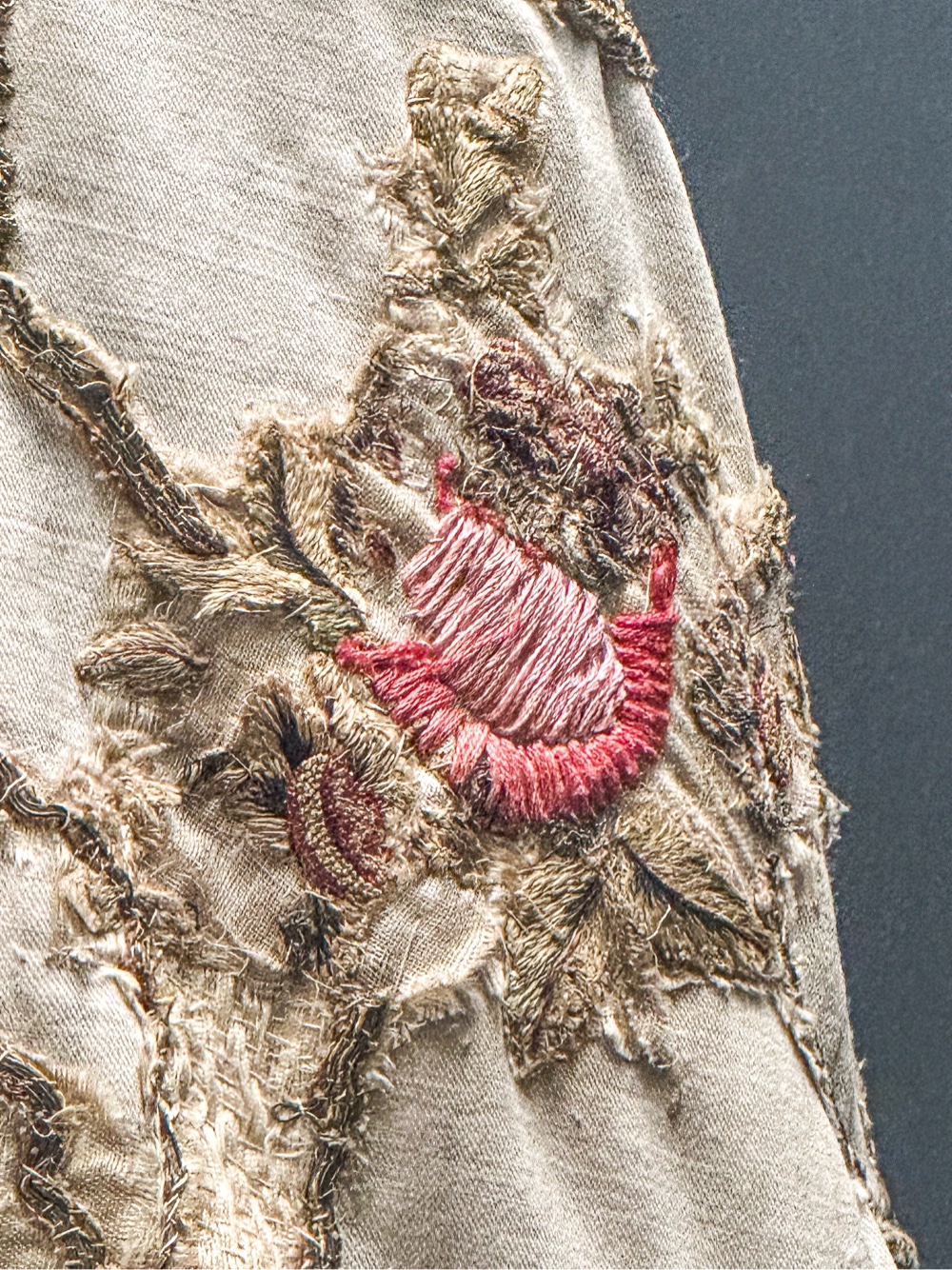
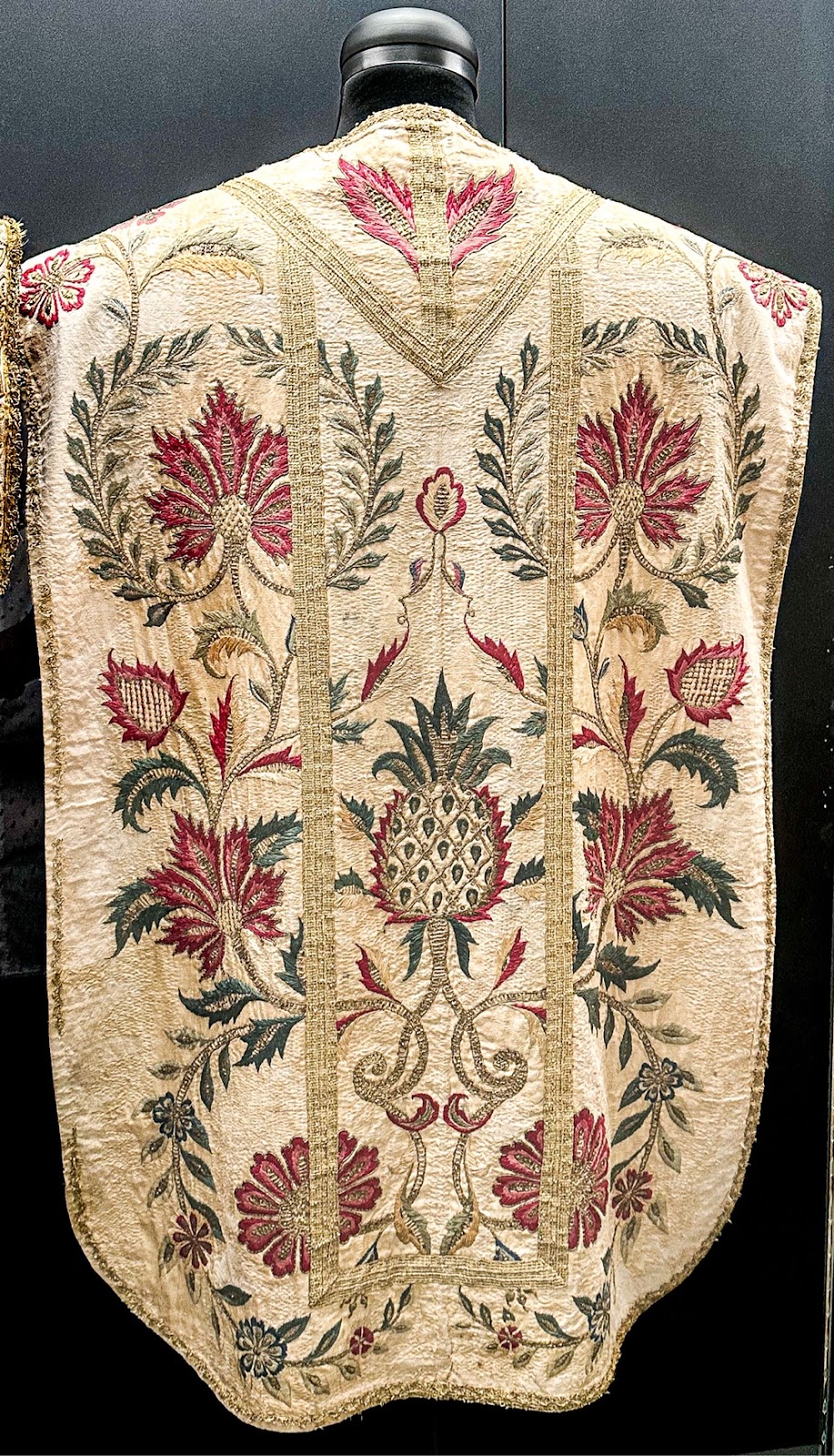
Curiously, when I spent some time at the Museum of Christian Art in Goa, looking at church vestments, I found no trace of split stitch in any of the ecclesiastical garments in their collection. Instead there was greater usage of Persian techniques and Zari with some bold satin stitch.
I’m still researching the influences that led the Franciscan churches in Goa, away from European traditions, to embrace a whole new way of embellishing church vestments.

You are brilliant dear. Enjoyed reading this. So so creative. Bless you
ReplyDeleteDear anonymous reader, I’m glad you enjoyed the read. Thank you.
DeleteBrilliant and knowledgeable
ReplyDeleteThank you Manju, thrilled that you continue to read. 🙏
ReplyDeleteSo interesting, inspiring, rich. Thank you
ReplyDeleteThank you dear anonymous reader
DeleteI'm endlessly fascinated by the way techniques and skills spread, adapt, alter, and become indigenous to new regions. Nothing belongs in one place.
ReplyDeleteThe funny thing is that so much about embroidery stitches one takes for granted as being indigenous have always been part of exchange. A fascinating facet of the Silk trade route was that people used to stay at different places, learn skills and return after many months to incorporate into their work. It’s said that French knot started out as the Peking knot, chain stitch, satin stitch and even cross stitch have travelled through these routes, so can anyone claim ownership? I love the history routes that they took to reach me.
DeleteGosh, Gopika! I really thought you were writing a book on embroidery - your knowledge is so profound. Very interesting read indeed and the photos are so attractive. Much love, Julia. So, why am I anonymous? Ask Google! I can't sign into my own Google account because it's so complex!
ReplyDeleteThank you Julia. It’s annoying that google is making so many people anonymous. I’m not writing a book, I’m passionate about textiles and read and research to know more about what I’m doing where it came from et al. It adds to the charm of the making. Thank you for reading
Delete